


.png?sw=2000)
Key takeaways
- Hyperpigmentation is the medical term for a type of skin discolouration that manifests in darker patches of skin across the body.
- Hyperpigmentation on the face can have several root causes, including injury or trauma to the face, medication side effects, UV exposure, and vitamin deficiencies.
- Using targeted serums, creams, and cleansers, such as those in La Roche-Posay's Mela B3 range, can help to reduce the visible appearance of dark spots on the face.
- Wearing sunscreen every day can help to reduce your chances of hyperpigmentation on the face.
What this article will cover
- What is hyperpigmentation around the mouth?
- What causes hyperpigmentation around the mouth?
- How to get rid of hyperpigmentation around the mouth
- Creams for mouth & upper lip hyperpigmentation
- Serums for hyperpigmentation around the mouth
- Cleansers for dark spots around the mouth and face
- Suncreams to prevent hyperpigmentation
- Fighting hyperpigmentation with the Mela B3 range
What is hyperpigmentation around the mouth?
Hyperpigmentation is the term used to describe a type of skin discolouration that leads to darker patches. Though it can have several root causes, hyperpigmentation often occurs when melanin production increases, causing the skin's colour to darken as a result.
Hyperpigmentation around the mouth is a common form of skin discolouration, but dark spots on the skin can happen anywhere on the body, not just around the mouth. In most cases, hyperpigmentation is not serious, but it's worth addressing the root cause of it to ensure it's not a sign of an underlying condition.
.png?sw=800&sh=800&sm=fit "A close-up shot showing dark spots around the mouth.")
What causes hyperpigmentation around the mouth?
While dark spots around the mouth occur due to an increased production of melanin, what causes this production to increase can vary. Some of the most common causes of hyperpigmentation include:
- Side effects of medications: Some medications can increase the risk of hyperpigmentation.
- UV/sun exposure: Prolonged exposure to UV rays can increase your risk of hyperpigmentation and sun spots as you age.
- Injuries to the face: Burns, infections, injury, or serious acne breakouts can all lead to hyperpigmentation on the face after the skin has healed. This type of discolouration tends to disappear after a few months.
- Vitamin deficiencies: Deficiencies in vitamin B12 and D can make a person more prone to dark spots around the mouth.
- Melasma: Often associated with pregnancy or oral contraceptives, melasma causes dark brown and grey patches on the forehead, cheeks, and around the mouth. The condition is most common in women but can also happen in men.
Hyperpigmentation tends to affect people with darker skin more, due to a higher rate of melanin production already present in the skin.
How to get rid of hyperpigmentation around the mouth
In most cases, changes in upper lip pigmentation is nothing to worry about. If you are concerned or have noticed excessive hyperpigmentation appearing, visit your doctor for professional advice.
Even if there's no cause for concern, hyperpigmentation on the face can be unwanted, and there are steps you can take to reduce its appearance. Using targeted creams, serums, and skincare products can help you rebalance skintone and reduce the visible appearance of hyperpigmentation.
Creams for mouth & upper lip hyperpigmentation
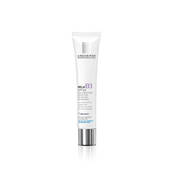
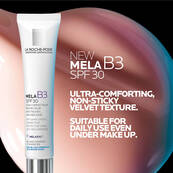
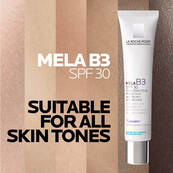
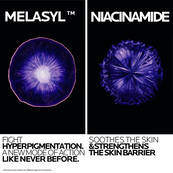
For those experiencing hyperpigmentation around the mouth, one of the easiest fixes is swapping out your usual moisturiser for one that targets skin discolouration. La Roche-Posay's Mela B3 SPF 30 Moisturiser for Dark Spots uses our new patented molecule Melasyl™ and Pure Niacinamide to target dark spots around the mouth and correct their tone. Melasyl™ has a unique mode of action; it intercepts excess melanin precursors before they mark the skin, reducing the visible appearance of hyperpigmentation.
Mela B3 Moisturiser also contains broad-spectrum SPF 30 protection to protect the skin against UV damage and reduce the risk of new dark spots forming on the skin. To use, simply swap out your daily moisturiser for Mela B3 and apply a generous amount to the face and the neck in the morning and evening.
Serums for hyperpigmentation around the mouth
If you're not already using a facial serum, it may be time to consider one. Serums are a great way to target specific skin concerns, like discolouration. Serums for hyperpigmentation contain concentrated levels of key ingredients designed to target discolouration and even out skin tone.
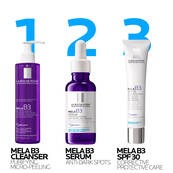
La Roche-Posay's Mela B3 Intense Anti-Dark Spot Serum uses Melasyl™ and Niacinamide to lighten the visible appearance of existing hyperpigmentation around the mouth, and prevent the appearance of future discolouration. It helps to fight the appearance of even the most stubborn marks, and absorbs quickly, so you can avoid stickiness after use.

Cleansers for dark spots around the mouth and face
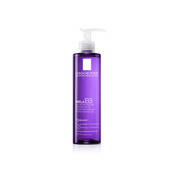
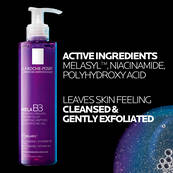
When we think of ways to target cosmetic issues, we tend to overlook cleansers and assume that moisturisers, serums, or toners are doing the heavy lifting when targeting skin concerns. With La Roche-Posay's Mela B3 range, this isn't the case, and the Mela B3 Cleanser for Dark Spots can be used as an effective tool against skin discolouration.
Mela B3 Cleanser uses a trio of Melasyl™, Niacinamide and Poly-Hydroxy Acid to hydrate and exfoliate skin, whilst also targeting discolouration and dark spots around the mouth. If you're trying to even out areas of discolouration on the face, Mela B3 Cleanser is the perfect way to start your daily skincare routine.
.png?sw=800&sh=800&sm=fit "A product shot of Mela B3 Cleanser for Dark Spots.")
Suncreams to prevent hyperpigmentation
Exposure to UV rays is one of the main ways hyperpigmentation on the upper lip and around the face occurs. If you have dark spots around the mouth and want to prevent new ones from forming, then using a broad-spectrum SPF should be a crucial part of your skincare routine.
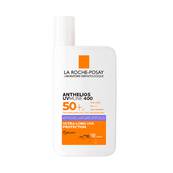
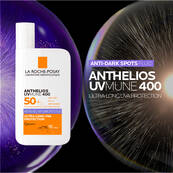
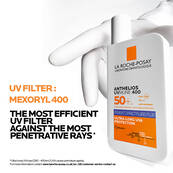
For daily UV protection, we recommend using Anthelios Anti-Dark Spots Facial SPF50+ Fluid, a lightweight and non-greasy suncream with broad-spectrum protection against UVA and UVB rays. Anthelios Anti-Dark Spots also comes with Melasyl™, which helps target uneven skin tone while providing protection against new sun damage.
Skincare routine for hyperpigmentation around the mouth
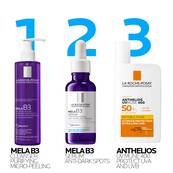
| Product Type | Recommended Product | Key Ingredients | When to Use |
|---|---|---|---|
| Moisturiser | La Roche-Posay Mela B3 SPF 30 Moisturiser for Dark Spots | Melasyl™, Niacinamide, Broad-spectrum SPF 30 | Apply generously every morning to face and neck |
| Serum | La Roche-Posay Mela B3 Intense Anti-Dark Spot Serum | Melasyl™, Niacinamide | 2–3 drops AM and PM, after cleansing |
| Cleanser | La Roche-Posay Mela B3 Cleanser for Dark Spots | Melasyl™, Niacinamide, Poly-Hydroxy Acid (PHA) | Use daily, AM and PM, as first step |
| Sunscreen | La Roche-Posay Anthelios Anti-Dark Spots SPF50+ Fluid | Melasyl™, Broad-spectrum SPF 50+ | Apply AM as final skincare step |
Fighting hyperpigmentation with the Mela B3 range
While common, hyperpigmentation around the mouth is often unwanted and can make us feel less secure in our skin. Thankfully, consistent use of targeted serums, creams, and cleansers can help to reduce the appearance of dark spots.
If you have dark spots around your mouth, La Roche-Posay's Mela B3 range can be a great addition to your skincare routine. With products making use of the new and targeted Melasyl™ alongside Niacinamide, Mela B3 targets the visible appearance of existing dark spots, while reducing the risk of future ones.
Discover the Mela B3 range today
FAQs
Featured Products
LIST OF SOURCES:


.png)
.png)